

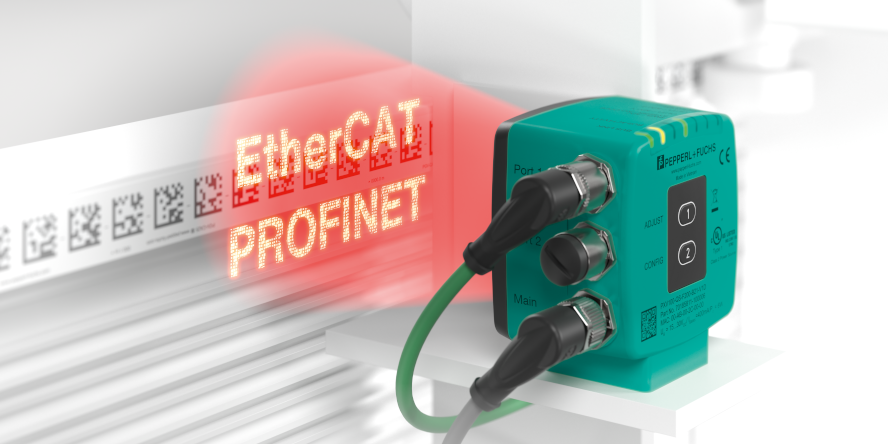
FAQs on the PXV and PCV Positioning Systems: Why Is It Worth Switching to the New Generation?
Content of This Article
- The new generation of PXV and PCV positioning systems offers several advantages—real-time positioning, flexible mounting, and advanced diagnostics.
- Improvements include an increased sampling rate, a larger field of view, new diagnostic data, and remote access via TCP/IP.
- The PXV and PCV devices are functionally compatible with the existing product portfolio, which is gradually being transitioned to the new generation.
New interfaces, improved real-time positioning, more diagnostic data: The first new-generation read heads for the PXV and PCV positioning systems are now available. Based on feedback from customers, a number of improvements have been implemented in the areas of optics, performance, and interfaces. As a future-oriented solution, the new read heads comply with the requirements of the EU Cyber Resilience Act (CRA). Continuous enhancements and updates ensure long-term investment protection.
What has changed with the new models, what advantages do they offer, and what does this mean for the devices already in use at your facility? In this blog article, we answer the most frequently asked questions about the PXV and PCV positioning systems.
What Improvements Does the New Generation Offer?
Due to optimized hardware and software features, the new read heads offer several advantages, from enhanced real-time positioning and more flexible mounting to improved diagnostic capabilities.
More Precise Real-Time Positioning
The evaluation frequency has been increased from 40 to 100 Hz, as well as the maximum passage speed from 8 to 12.5 m/s. This enables highly accurate real-time positioning even during fast motion sequences.
In addition, image captures can be time-stamped and counted using a frame counter, allowing the images to be synchronized with the corresponding position data. The signed velocity value also makes it possible to detect whether the movement is in or against the direction of travel, simplifying data processing by the controller.
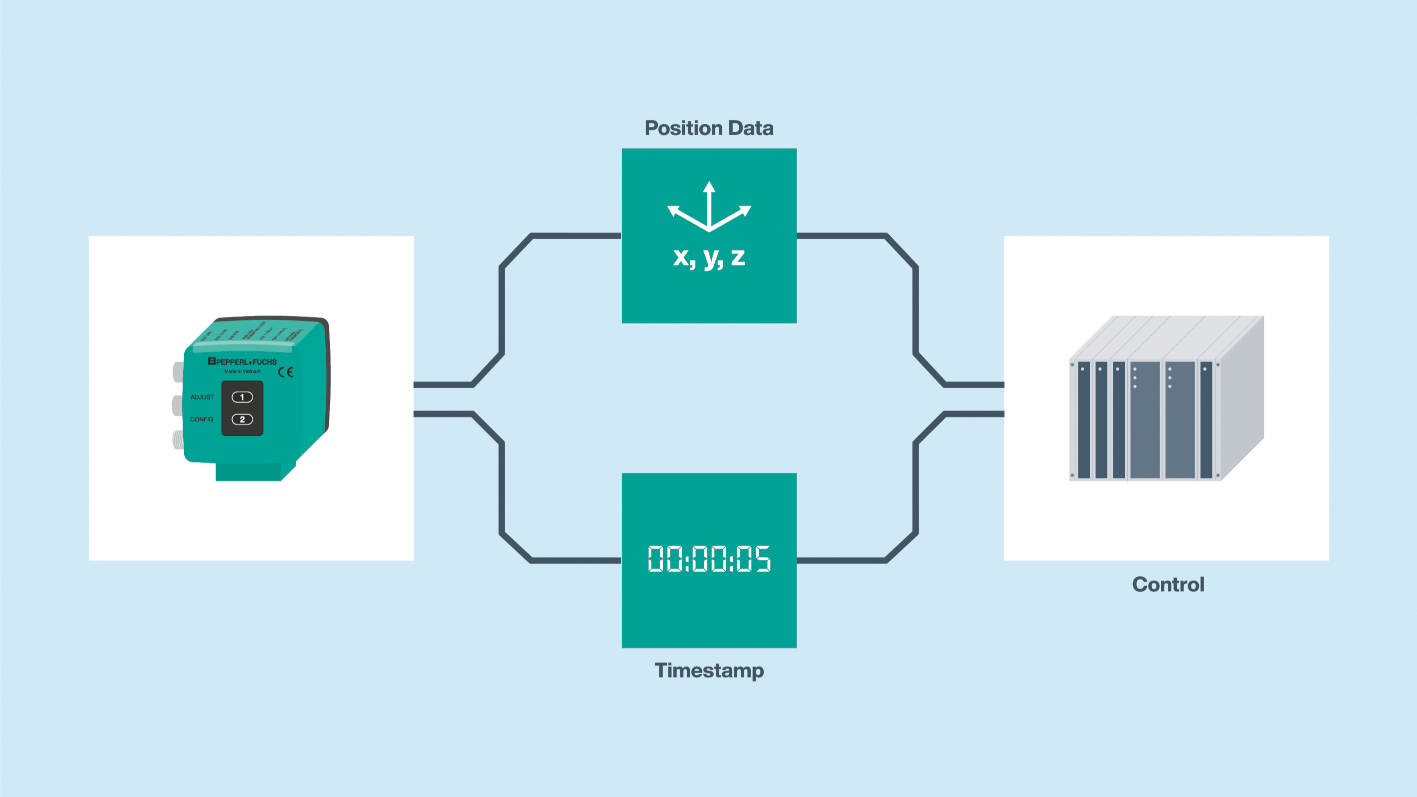
All image captures are assigned a timestamp, enabling them to be synchronized with the corresponding position data.
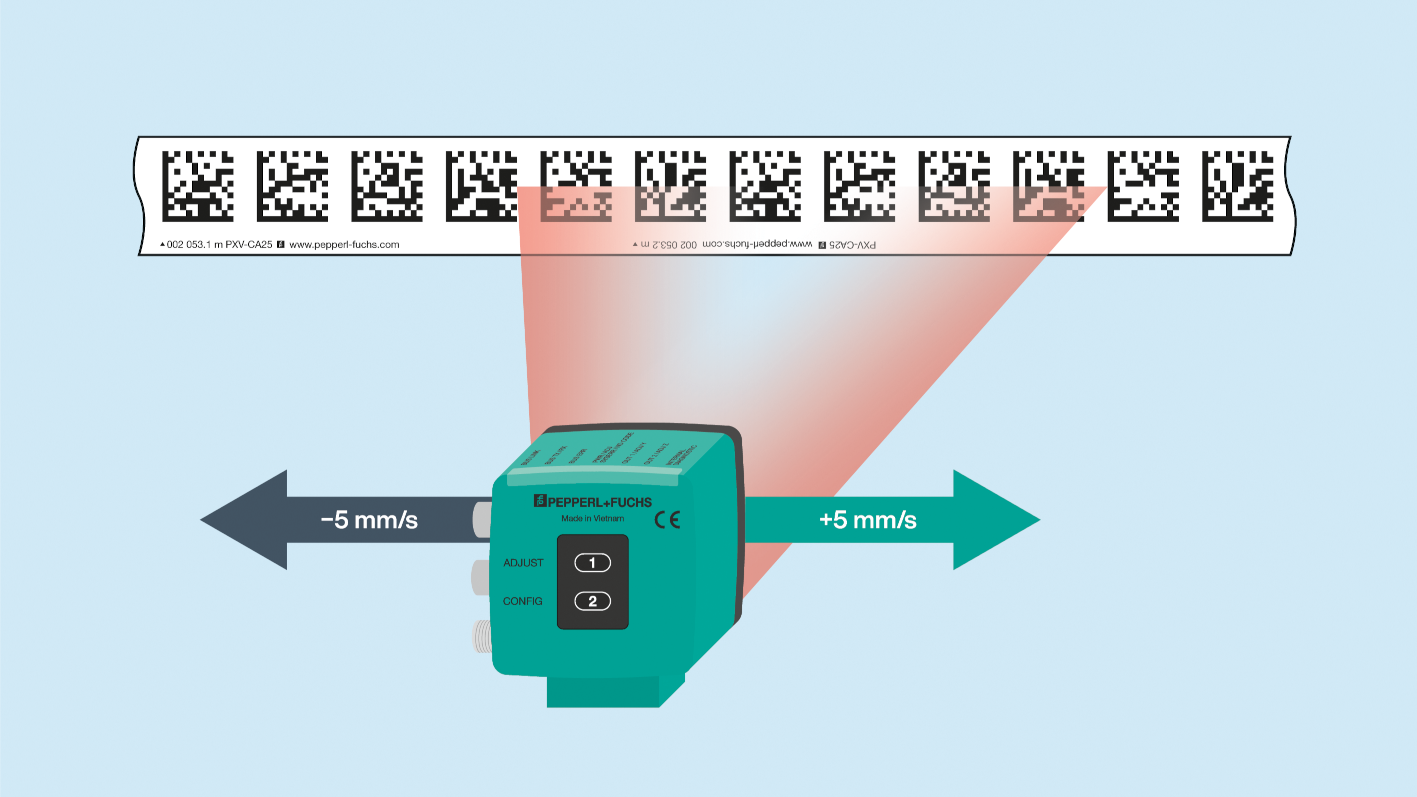
Speed is output with a + or – sign, indicating the direction of movement.
Greater Robustness and Flexibility in Mounting
The new versions feature a significantly larger field of view, which increases redundancy. Due to the expanded field of view, it is now also possible to bridge larger gaps between the codes. This provides greater flexibility during installation, particularly for overhead conveyor systems where expansion joints or steel structures prevent the code tape from being laid continuously.
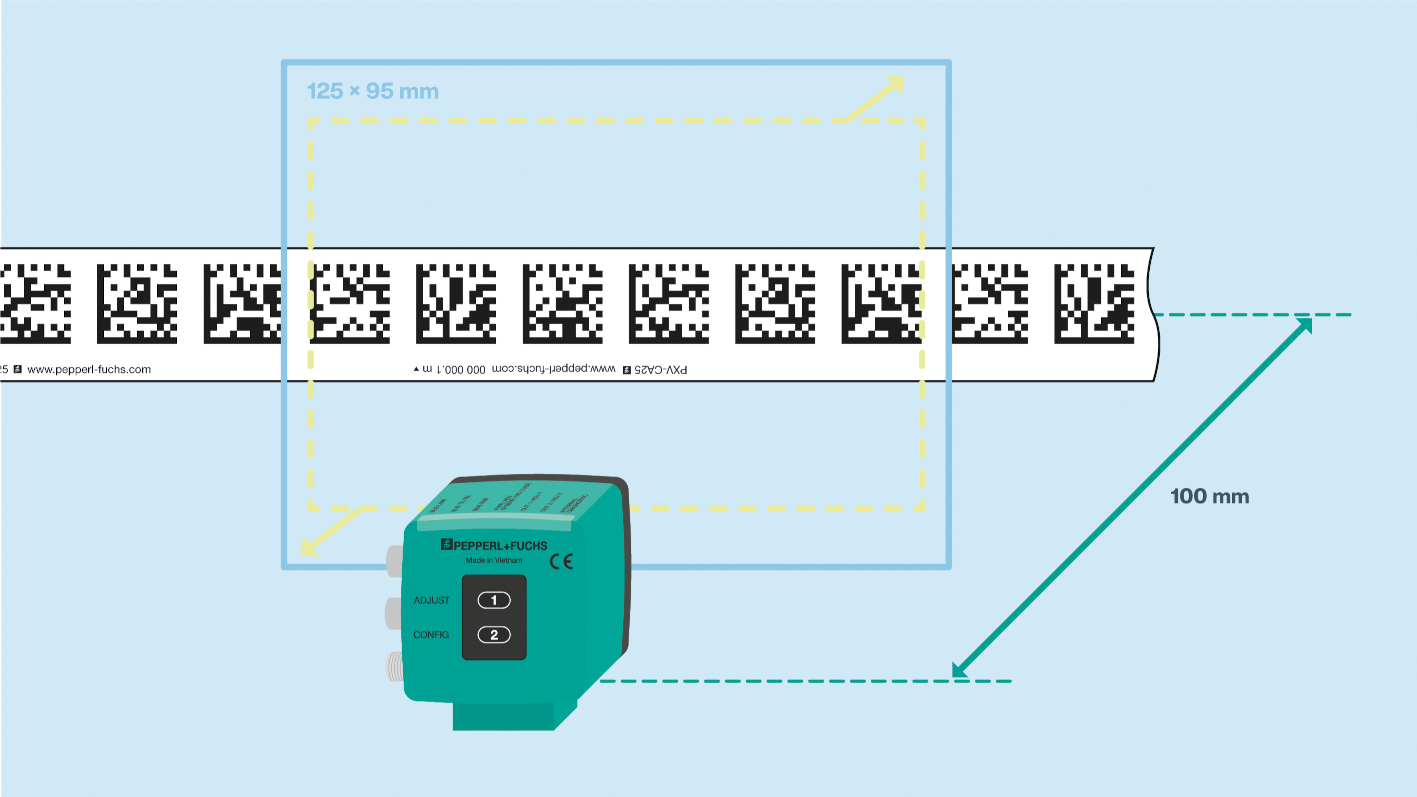
The new read heads offer a significantly larger field of view than the existing models.
Improved Diagnostic Capabilities
The communication interface of the new PROFINET and EtherCAT devices allows access to a range of additional diagnostic data:
- z-distance: Monitoring the distance from the read head to the code tape → detection of mounting errors
- Rotation angle: Monitoring the rotation angle of the read head relative to the code tape → detection of mounting errors
- Quality values: Output of quality values for assessing the scene detected by the read head, including the code tape, e.g. number of codes read → early detection of contamination or damage
- Timestamp: Output of position values with timestamps → time-based correlation of image captures with the corresponding position data
- Frame counter: Output of speed with + or – signs → time-based correlation of image captures with the corresponding position data
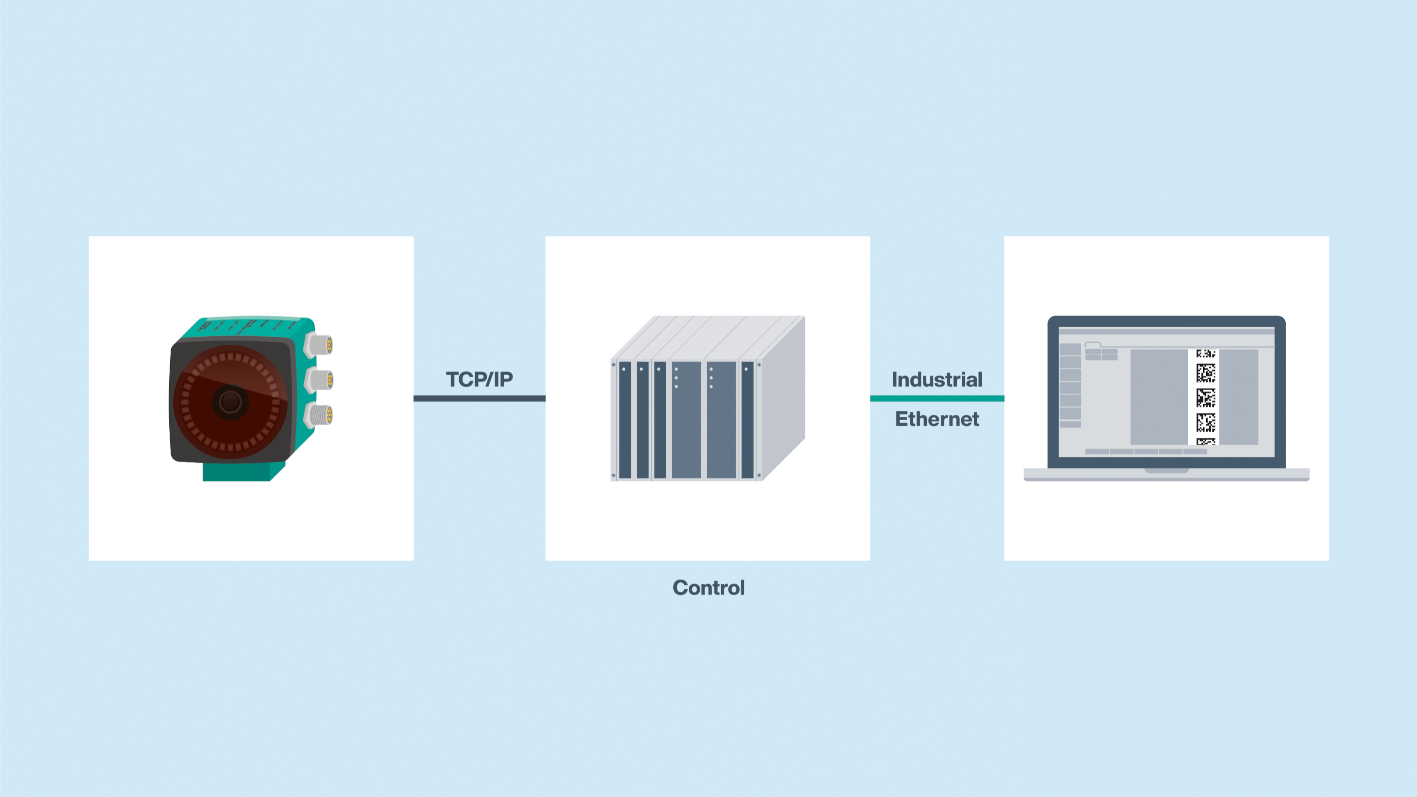
The TCP/IP service interface provides remote access to a wide range of useful diagnostic data.
The sensor can be connected via the TCP/IP service interface to the Pepperl+Fuchs Vision Configurator software. This allows diagnostic data to be displayed and images to be captured. In addition, remote updates can be performed via the service interface.
Which New Devices Are Already Available, and Which Existing Devices Will They Replace?
So far, a total of four new read heads are available. One PXV and one PCV device in the proven F200 housing with a PROFINET interface will replace two existing PXV and five existing PCV devices, respectively. In the same housing, a PXV and a PCV read head with an EtherCAT® interface are also available for the first time.
The following tables provide an overview of the changes to the product portfolio.
Overview of PXV Devices
| Existing PXV Devices | New Generation | |
|---|---|---|
| PROFINET | PXV100Q-F200-B17-V1D | PXV100QS-F200-B17-V1D |
| EtherCAT | – | PXV100QS-F200-B21-V1D |
Overview of PCV Devices
| Existing PCV Devices | New Generation | |
|---|---|---|
| PROFINET | PCV80-F200-B17-V1D | PCV100QS-F200-B17-V1D |
| EtherCAT | – | PCV100QS-F200-B21-V1D |
What Has Changed in the New PXV Generation?
At a distance of 100 mm, the field of view for the PXV devices increases from 115 × 73 mm to 125 × 95 mm. This now allows six Data Matrix codes to be read at once, instead of the previous five. In addition, gaps of up to 91 (instead of 81) mm between the codes can now be bridged, providing greater flexibility during installation.
The following table gives you an overview of how the new PXV devices differ from the existing ones:
| Existing PXV Devices | New PXV Devices | |
|---|---|---|
| Evaluation frequency | 40 Hz | 100 Hz |
| Passage speed | ≤ 8 m/s | ≤ 12.5 m/s |
| Field of view at z = 100 mm | 115 × 73 mm | 125 × 95 mm |
| Device description file | Previous GSDML | New GSDML |
| Interfaces | PROFINET, EtherNet/IP™, RS-485, SSI | PROFINET, EtherCAT, and in the future also EtherNet/IP, RS-485, SSI |
| Process data (PROFINET, EtherCAT) | Position data (x, y), speed, status data, warnings, event markers | Position data (x, y), speed, status data, warnings, event markers, z-distance, rotation angle, timestamp, frame counter, quality values, number of codes read |
| Service interface | USB (PROFINET) | TCP/IP (PROFINET, EtherCAT) |
| Cybersecurity | No further development with regard to CRA requirements | CRA-compliant, continuous development and updates |
What Has Changed in the New PCV Generation?
The new PCV devices have a field of view of 70 × 50 mm (at z = 100 mm) or 56 × 40 mm (at z = 80 mm)—a significant improvement over previous models. At a distance of 100 mm, 14 codes can now be read at once, instead of the previous eight (PCV80), ten (PCV100), or twelve (PCV100*6011). This now allows for larger gaps between codes to be bridged: the code tape can be interrupted by up to 52 mm at a mounting distance of 100 mm. At the same time, the tolerance range for the z-distance has been increased to ±45 mm to provide greater flexibility during installation. All new PCV positioning systems also feature a range of 100 km.
The following table provides an overview of how the new PCV devices differ from the existing ones:
| Existing PCV Devices | New PCV Devices | |
|---|---|---|
| Maximum track length | 0 … 10/100 km | 100 km |
| Evaluation frequency | 40 Hz | 100 Hz |
| Passage speed | ≤ 8 m/s | ≤ 12.5 m/s |
| Reading distance (z) | 100 mm
80 mm |
100 mm |
| Mounting tolerance for the z-distance | ±20 mm (PCV)
±40 mm (PCV*6011) |
± 45 mm |
| Field of view at z = 100 mm | 50 × 30 mm (PCV)
60 × 35 mm (PCV*6011) |
70 × 50 mm |
| Interfaces | PROFINET, EtherNet/IP, RS-485, SSI | PROFINET, EtherCAT, and in the future also EtherNet/IP, RS-485, SSI |
| Device description file | Previous GSDML | New GSDML |
| Process data (PROFINET, EtherCAT) | Position data (x, y), speed, status data, warnings, event markers | Position data (x, y), speed, status data, warnings, event markers, z-distance, rotation angle, timestamp, frame counter, quality values, number of codes read |
| Service interface | USB (PROFINET) | TCP/IP (PROFINET, EtherCAT) |
| Cybersecurity | No further development with regard to CRA requirements | CRA-compliant, continuous development and updates |
What Are the Differences Between the PXV and PCV Series?
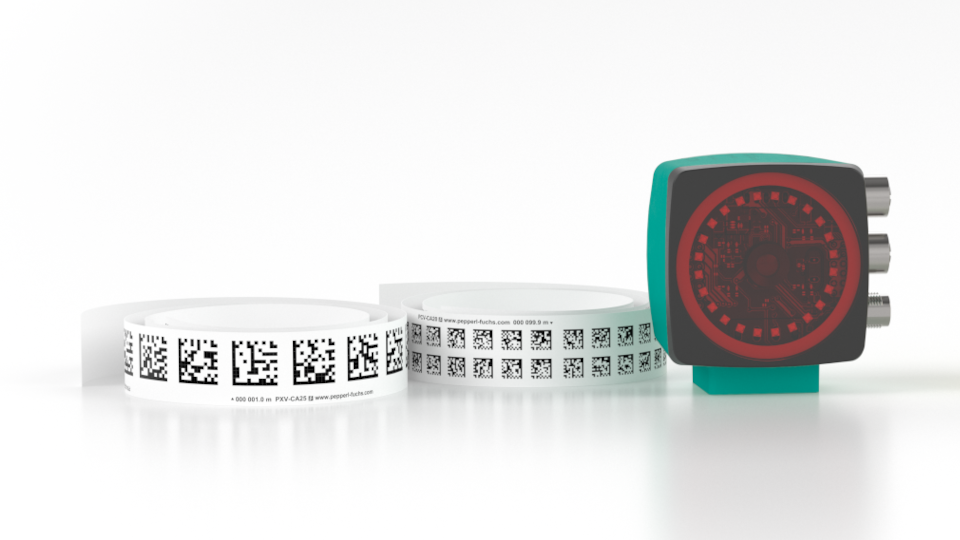
The PXV and PCV positioning systems are suitable for precise, non-contact absolute positioning over distances of up to 100 km. They consist of a 2-D read head combined with a Data Matrix code tape. The main difference lies in the size of the fields of view and the codes used: With a larger field of view, the PXV system reads larger Data Matrix codes, ensuring particularly reliable operation even in the presence of contamination. The PCV system, on the other hand, relies on smaller codes and a smaller field of view, allowing it to be used in confined installation spaces.
The following table compares the key technical specifications of the new PXV and PCV generations:
| PXV | PCV | |
|---|---|---|
| Maximum track length | 0 … 100 km | 0 … 100 km |
| Evaluation frequency | 100 Hz | 100 Hz |
| Passage speed | ≤ 12.5 m/s | ≤ 12.5 m/s |
| Reading distance (z) | 100 mm | 100 mm |
| Mounting tolerance for the z-distance | ±50 mm | ±45 mm |
| Field of view at z = 100 mm | 125 × 95 mm | 70 × 50 mm |
| Positioning accuracy | 0.2 mm | 0.1 mm |
| Interfaces | PROFINET, EtherCAT, and in the future also EtherNet/IP, RS-485, SSI | PROFINET, EtherCAT, and in the future also EtherNet/IP, RS-485, SSI |
| Service interface | TCP/IP | TCP/IP |
| Dimensions | 80 × 84.5 × 50 mm | 80 × 84.5 × 50 mm |
| Code tape | Code tape PXV*-CA25-* | Code tape PCV*-CA10-* / PCV*-CA20-* |
Are the New Devices Compatible with the Existing Devices?
Yes, the new read heads are functionally compatible with the existing ones. Dimensions, mounting, and electrical specifications remain unchanged. You can also use the same code tapes as before. However, the new PROFINET read heads cannot be used as 1:1 replacement devices, because the device description file and the process data have changed. Therefore, the GSDML file must be updated in the engineering tool when using them. This update provides users with additional diagnostic data for maintenance purposes or error analysis.
What About Existing PXV and PCV Read Heads?
The existing read heads will be phased out gradually, as the remaining PXV and PCV products transition to the new generation, including devices with EtherNet/IP, SSI, and RS-485 interfaces. This will enable all customers currently using these systems to benefit from CRA compliance and the other advantages of the new generation.
Subscribe to our newsletter and receive regular news and interesting facts from the world of automation.