

Five Applications for Inductive Safety Sensors: Process Safety for Humans and Machines According to SIL 2/PL d
Content of This Article
Five Applications for Inductive Safety Sensors: Process Safety for Humans and Machines According to SIL 2/PL d
In modern industrial applications, humans and machines are working ever more closely together. The strict separation of work areas is increasingly giving way to cooperation and interaction between personnel and machines, such as when working on automated machine tools or autonomous mobile robots in intralogistics applications. Such applications require a high degree of process safety and occupational safety and health. At the same time, the demands on plant availability and easy integration into automation concepts are increasing.
Inductive safety sensors from Pepperl+Fuchs enable efficient and safe machine concepts, both in industrial environments and in outdoor use. They are extremely durable, operate non-contact and wear-free, and their compact housing allows easy integration into machines and systems. Meeting the requirements for functional safety and the Machinery Directive, they offer high safety values that simplify integration into the safety loop and minimize testing requirements. A standardized OSSD (Output Signal Switching Device) interface and comprehensive safety documentation further support seamless implementation. Pepperl+Fuchs inductive safety sensors are approved according to SIL 2/PL d, and in redundant design they achieve SIL 3/PL e.
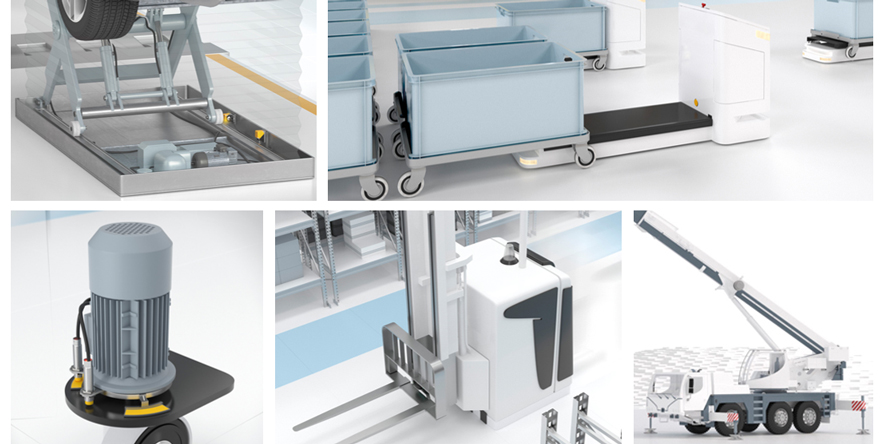
This blog article highlights five applications for inductive safety sensors and explains the advantages they offer.
Safe Human-Machine Cooperation in Automated Manufacturing Processes
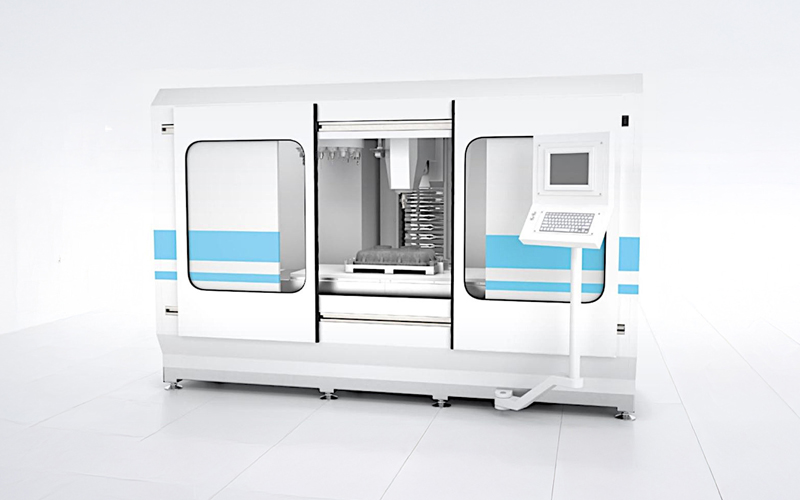
In automated production and machine tools, monitored safety guards ensure the safety of operating personnel and protect against dangerous interference with running manufacturing processes. Inductive safety sensors from Pepperl+Fuchs reliably monitor whether a safety guard is closed before the machine process is enabled. They feature a standardized OSSD interface for direct connection to a safety SPS or I/O modules. Non-contact detection, compact housing design, and approval for safety applications up to SIL 2/PL d (even SIL 3/PL e in redundant versions) make inductive safety sensors ideal for use in automated manufacturing processes where humans and machines work closely together.
Safe Positioning of Automated Guided Vehicles and Autonomous Mobile Robots
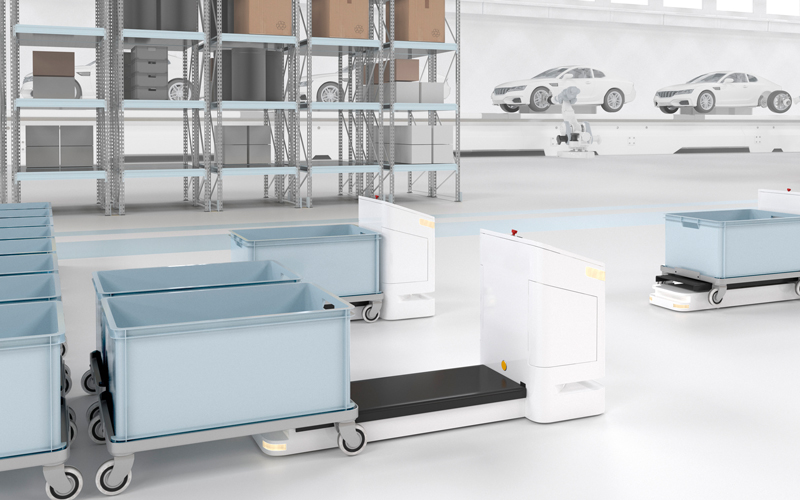
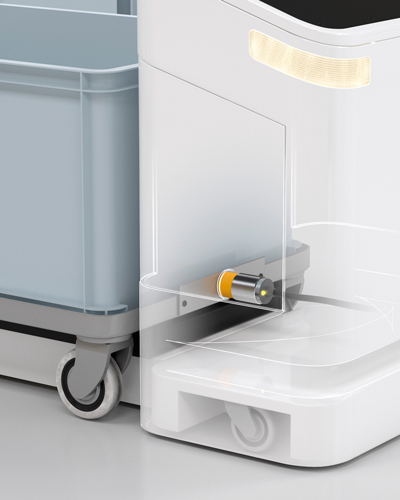
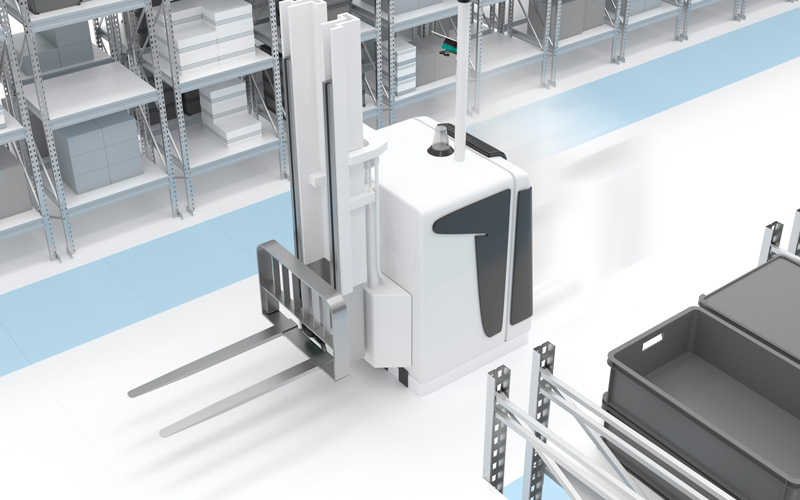
Automated guided vehicles (AGV) and autonomous mobile robots (AMR) are a central component of modern intralogistics. Inductive safety sensors enable reliable and securely position detection of vehicles, for example at transfer points or charging stations. The safety sensor only detects the material trolley when it is in the safe position above the platform. Then a corresponding switching signal triggers the lifting process. With high repeat accuracy and functional safety up to SIL 2 / PL d, the sensors support safe and efficient material flows.
Reliable Detection of Direction of Movement in AGV and AMR Control
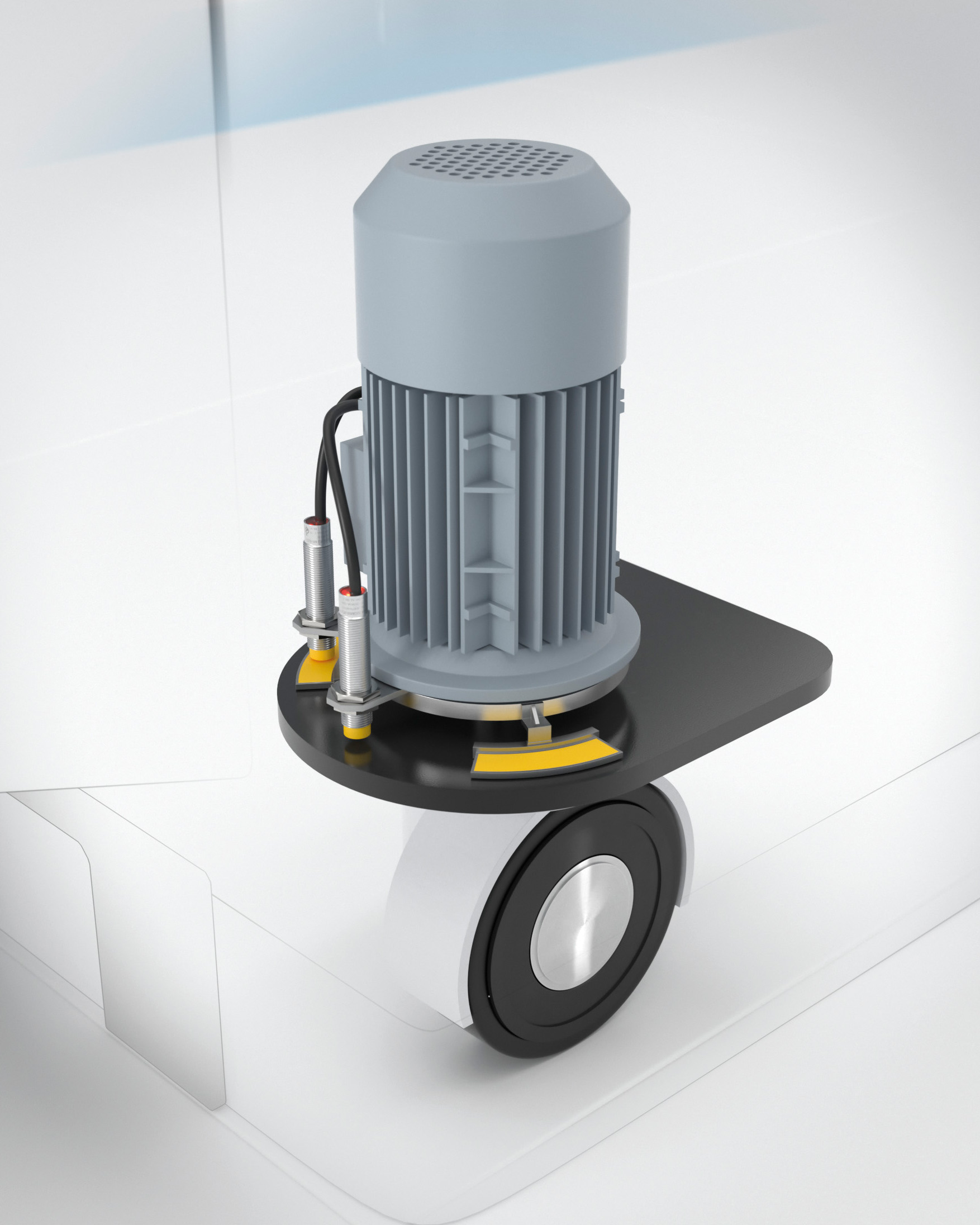
In addition to pure position determination, reliable direction detection also plays an important role in the control of AGVs and AMRs. Functionally safe inductive sensor solutions reliably detect the direction of travel and forward this information to the control system. This is done by monitoring the switching cams on each steering axle on the AGV. This helps prevent incorrect movements and supports safe driving strategies, including in complex and dynamic intralogistics environments.
Safe End Positioning of Scissor Lift Tables
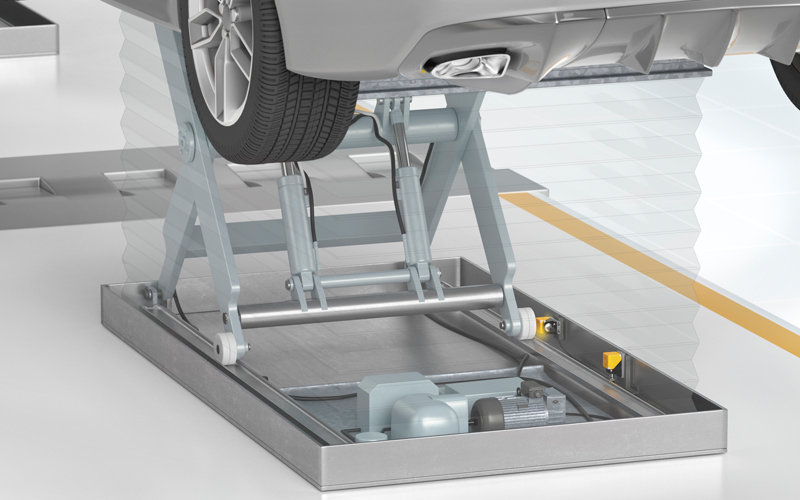
In automotive industry production lines, scissor lift tables are used to position car bodies or assemblies, for example, to bring them to an ergonomic working height for employees or to the optimum height for robots. Inductive safety sensors detect the retracted and extended position of the scissor lift tables precisely and reliably. Thanks to detection without dead bands and the absence of special targets, the sensors are easy to install and maintain safe processes even at high cycle rates.
Safe Monitoring of the Boom Arm on Mobile Cranes
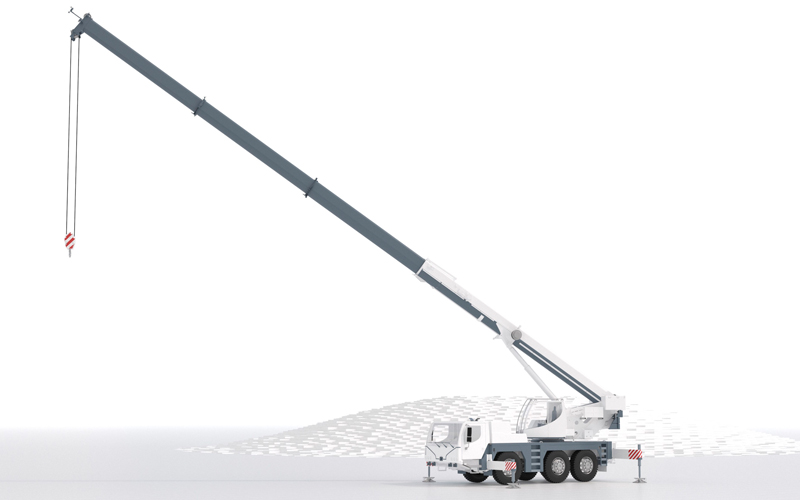
In the field of mobile equipment, such as mobile cranes, it is essential that the boom arm is securely locked in place. Inductive safety sensors reliably monitor the correct position and locking of the boom mechanism – even under harsh ambient conditions. Due to their extended temperature range of -40 °C to +85 °C and E1 approval, which ensure durability in challenging applications, the cylindrical variants are ideal for outdoor use in road traffic and contribute significantly to the operational safety of mobile cranes.
Advantages of Inductive Safety Sensors from Pepperl+Fuchs
Reliable Detection Without a Dead Band
A key unique selling point of Pepperl+Fuchs inductive safety sensors is detection without a dead band. Unlike many other inductive sensors, there is no minimum distance required between the sensor and the target. This means that standard metal actuators can be used without the need for adjustments or modifications to machine parts. This significantly reduces installation costs and lowers the total cost of ownership over the life cycle of the system.
High Process Reliability According to SIL 2/PL d, Redundant Design up to SIL 3/PL e
The inductive safety sensors are approved according to SIL 2 and Performance Level d (PL d), thereby meeting the high requirements of functional safety and the Machinery Directive. In redundant designs, safety levels up to Category 3, SIL 3/PL e can even be achieved. The high characteristic safety values not only facilitate integration into existing safety loops, but also lead to longer operating intervals. Prescribed reference runs and test cycles can be significantly reduced, which significantly increases plant availability.
Easy Integration and Convenient Handling
Using the standardized OSSD interface (Output Signal Switching Device), the sensors can be connected directly to safety controllers or IO modules. Comprehensive safety documentation supports users in ensuring standard-compliant integration. Electrical connection is possible either via cable or standardized M12 connectors, which further simplifies commissioning.
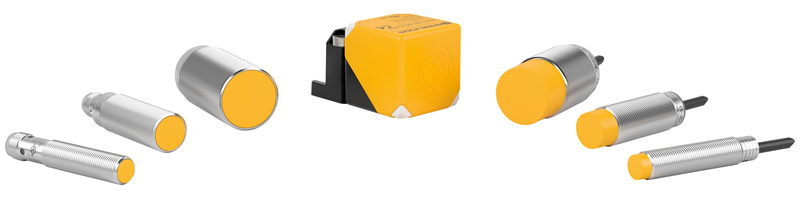
The portfolio comprises four series in cylindrical and rectangular designs with different switching distances. The rugged and durable cylindrical variants are designed for demanding environments: They have an extended temperature range from –40 °C to +85 °C and E1 approval. This makes them ideal for a wide range of industrial applications and mobile equipment. Variants made of V4A stainless steel are also available.
More Information
Subscribe to our newsletter and receive regular news and interesting facts from the world of automation.